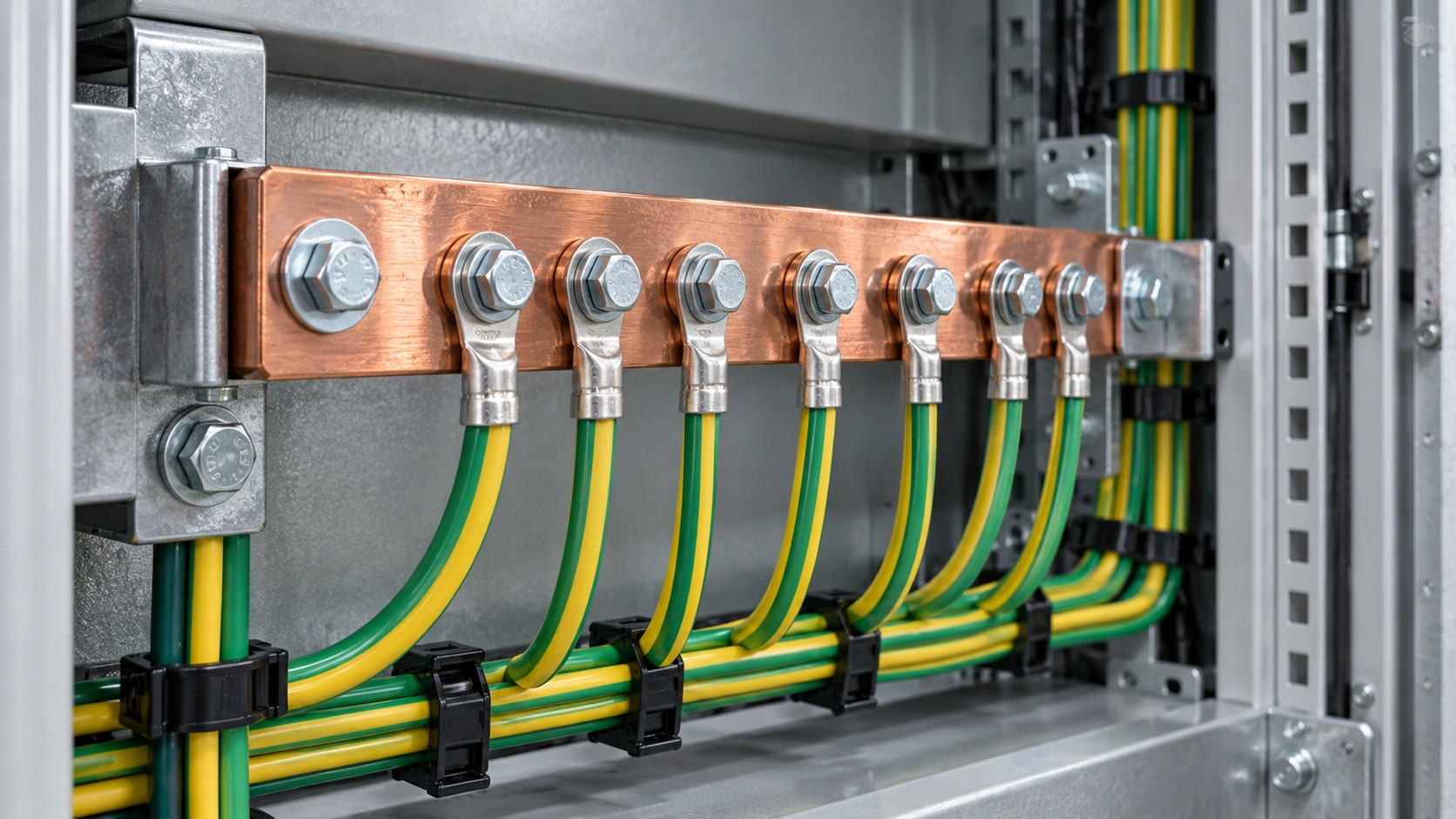
A construction-site distribution box is not a light-duty enclosure with sockets fitted. It is an assembly for construction sites (ACS), covered by IEC 61439-4, and it has to survive being moved, dropped, rained on, and plugged into by whoever is on shift. Key specification points are ingress protection of IP44 or better, impact resistance to IEC 62262, industrial socket-outlets to IEC 60309, RCD protection to IEC 60364-7-704, and a documented inspection regime after every relocation.
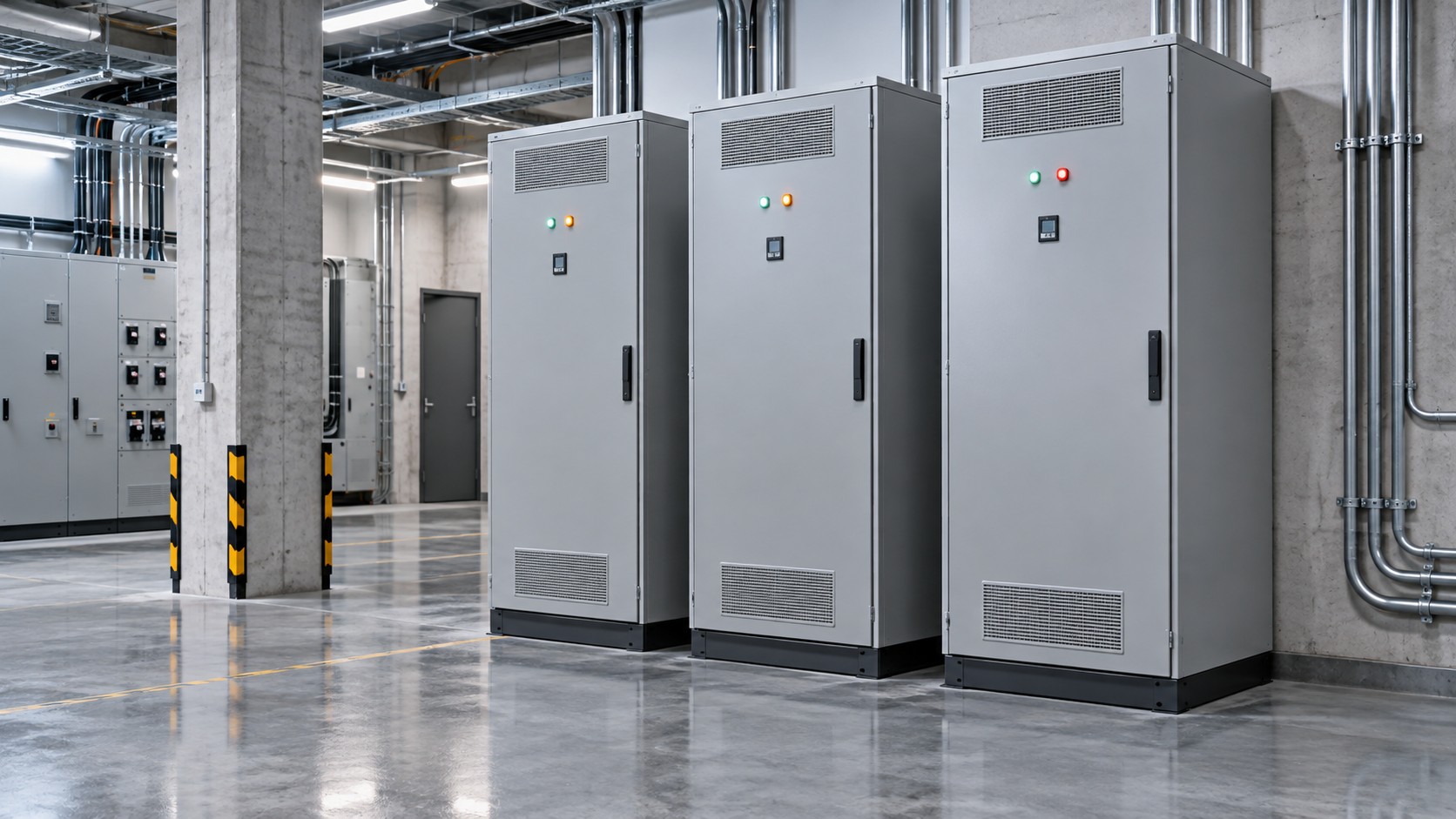
What makes a site board different
Temporary power differs from a fixed installation in four ways: the equipment moves, the environment is wet and abrasive, the users are often not electrically skilled, and the installation is inspected far more often. IEC 61439-4 is the particular-requirements part of the IEC 61439 series that applies to assemblies for construction sites; it sits on top of IEC 61439-1 general rules and replaces the older IEC 60439-4. Wiring rules on the site itself come from IEC 60364-7-704 (construction and demolition site installations); in North America, NEC Article 590 covers temporary installations.
Typical site units seen on projects range from small portable boxes with two or three 16 A outlets, through mid-sized units with 63 A or 125 A incoming and a bank of 16 A and 32 A sockets, up to site intake pillars rated 200 A to 630 A feeding sub-distribution units.
Requirements to write into the specification
The following are the points commonly specified for ACS units. Confirm each against the current edition of IEC 61439-4, the local wiring rules, and the project’s safety plan:
- Ingress protection: IP44 is a usual minimum for site equipment per IEC 60529; IP54 or IP65 is typically specified for units standing in the open or in mud, with IP67 caps on unmated socket-outlets.
- Impact resistance: an IK rating to IEC 62262 — IK08 (5 J) is commonly specified as a floor, IK09 (10 J) or IK10 (20 J) where vehicles and materials move close by.
- Mechanical construction: a frame or skid base, lifting handles or forklift pockets, stable footprint, and retention of doors and covers during transport.
- Socket-outlets: industrial sockets to IEC 60309-1 and IEC 60309-2, colour-coded and keyed by voltage and frequency so mismating is impossible (yellow for 100–130 V, blue for 200–250 V, red for 380–480 V circuits). Interlocked socket-outlets to IEC 60309-4 are widely specified so a plug cannot be engaged or withdrawn under load.
- RCD protection: IEC 60364-7-704 requires socket-outlet circuits rated up to 32 A to be protected by RCDs with a rated residual operating current not exceeding 30 mA; socket-outlet circuits above 32 A are commonly protected at up to 500 mA, with discrimination arranged so a fault on one tool does not darken the whole site. Select the RCD type (AC, A, F, or B to IEC 61008-1 / IEC 61009-1) for the actual load — tools with electronic speed control and welding sets can produce DC residual components that a Type AC device will not detect.
- Isolation and locking: an incoming isolator or MCCB with a lockable operating mechanism, and clear identification of each outgoing way.
- Marking and instructions: durable rating plate, circuit schedule, and instructions in the languages used on site.
- Re-verification: the unit must be re-inspected and re-tested after each relocation — not just at first commissioning.
Types of site distribution unit
| Type | Typical incoming | Typical outlets | Used for | Typical IP / IK specified |
|---|---|---|---|---|
| Portable tool box | 16–32 A | 2–4 × 16 A 230 V, sometimes 110 V | Hand tools, lighting strings | IP44 / IK08 |
| Mid-sized distribution unit | 63–125 A | 32 A and 16 A sockets, 230 V and 400 V | Floor or zone distribution | IP54 / IK09 |
| Site intake pillar | 200–630 A | 63 A / 125 A outlets, metering | Main temporary supply | IP54 / IK10 |
| Reduced-low-voltage unit | 16–32 A input | 110 V outlets for portable tools | Hand-held tools where the market requires reduced low voltage | IP44 / IK08 |
| Welding / dedicated load unit | 63–125 A | One or two high-current outlets | Welding sets, temporary heaters | IP54 / IK09 |
Common market configurations shown for guidance; ratings must be selected from the project’s load list and the manufacturer’s data.
Materials for site duty
- Sheet steel, painted or galvanised: the standard choice for intake pillars and larger units; check coating thickness and the specification for outdoor exposure.
- Stainless steel: coastal sites, tunnels, and long-duration projects.
- Polyethylene / GRP enclosures: light, corrosion-free, and impact-tolerant for small portable units; check UV stability and fire classification.
- Cables: heavy-duty flexible rubber cable such as H07RN-F is the usual choice for temporary wiring on site.
Application Scenario: Vertical Temporary Distribution on a Multi-Storey Building Site
Scenario constraints
A 20-storey building under construction has a 400 A temporary supply at ground level. Loads are a tower crane, a hoist, welding sets, and floor-by-floor hand tools and lighting. Conditions are wet and muddy, the distribution moves up the building every few weeks, and the site team changes frequently.
Selection approach
- Intake: a 400 A intake pillar with a lockable isolator, metering, and outgoing ways to the vertical riser and to the ground-level welfare and crane supplies.
- Vertical riser: a dedicated riser cable supported independently of the temporary distribution boxes, with a sub-distribution unit per two or three floors, each 125 A incoming.
- Floor units: 125 A units with 32 A and 16 A IEC 60309 outlets; 30 mA RCDs on all socket circuits up to 32 A; Type A or Type F RCDs where electronic tools are used.
- Discrimination: time- or current-selective RCD arrangement between the intake and the floor units, so a fault on one floor does not trip the crane supply.
- Ingress: IP54 minimum for floor units, IP67 caps on unmated sockets; IK09 or better for units near material routes.
- Handling: skid bases, lifting handles, and a circuit schedule protected behind a transparent cover.
- Inspection regime: a documented visual inspection and electrical re-test every time a unit is moved, plus a periodic formal inspection at the interval required by the local rules.
Common mistakes
- Daisy-chaining portable boxes so the total load exceeds the incoming rating of the first unit in the chain.
- Fitting domestic socket-outlets outdoors instead of IEC 60309 industrial outlets.
- Specifying Type AC RCDs on circuits feeding inverter-driven tools or welding sets, where DC residual components can blind the device.
- No discrimination between RCDs — one faulty tool trips the crane or the hoist.
- Socket-outlets mounted at ground level where they sit in mud and water.
- Unmated sockets left uncapped, and doors left open in rain.
- Cables routed across roadways and access routes without mechanical protection.
- Treating the first commissioning test as sufficient; the unit is re-energised in a different place every few weeks.
- Removing the front cover to run cables through the opening, which destroys the IP rating.
Acceptance checkpoints
- RCD testing: with an RCD tester — no trip at 0.5 × IΔn; trip at IΔn within 300 ms for general-type devices; trip within 40 ms at 5 × IΔn (verify the applicable limits in IEC 61008-1 / IEC 61009-1 and the local rules). Record the results.
- Protective conductor continuity: measured on every outlet and on the incoming supply.
- Insulation resistance: measured at 500 V on 230/400 V circuits, with 1.0 MΩ the usual minimum acceptance value for circuits up to 500 V.
- Polarity and phase sequence: verified, especially after any relocation or repair.
- Visual inspection: enclosure, gasket, gland entries, socket caps, handles, and the rating plate and circuit schedule.
- Functional check: each outlet energised and loaded briefly where practical.
- Documentation: an asset register with inspection dates, tester calibration, and the next inspection due.
Selection checklist
- Rated incoming current and voltage, and the available prospective short-circuit current at the supply position.
- Number, type, and rating of outlets; whether interlocked sockets are needed.
- IP rating (IEC 60529) and IK rating (IEC 62262) matched to the location.
- RCD ratings and types, with a discrimination plan.
- Enclosure material and coating, matched to coastal, tunnel, or general outdoor use.
- Handling provisions: skid, handles, forklift pockets, weight.
- Isolation and locking requirements, and metering if the utility requires it.
- Cable entry provisions that preserve the enclosure rating.
- Spares: socket caps, glands, replacement RCDs, and a maintenance schedule.
- The inspection interval and who signs each inspection.
Quality inspection checkpoints
- Material check: sheet thickness, coating type and thickness, or polymer specification against the order.
- Construction: weld quality, frame rigidity, door and cover retention, hinge and latch cycles tested on sample units.
- Ingress: IP test evidence for the assembled enclosure, socket-outlets, and cable entries as fitted.
- Impact: IK test evidence to IEC 62262 for the enclosure and for socket faces.
- Assembly: torque values on terminals recorded, phase identification and labelling correct, PE terminals and bonding continuity verified.
- Routine verification: dielectric test and functional checks to IEC 61439-1 Clause 11, with records per unit.
- Drop or transport test: where specified, verify that the unit is still serviceable after the specified handling test.
How to evaluate a site distribution supplier
- Ask which part of IEC 61439 the unit is verified against, and whether the evidence covers the assembled unit with sockets and glands fitted.
- Ask for IP and IK test evidence, not a catalogue claim.
- Ask which socket-outlet standard and range is used, and whether interlocked outlets and spare caps are available.
- Ask for RCD type options and a discrimination proposal for your distribution tree.
- Ask about transport and handling design: skid, handles, weight, and stacking.
- Ask what spares and repair parts are stocked, and what the lead time is to a site that is running behind schedule.
- Ask for the inspection and re-test checklist that ships with the unit.
Frequently Asked Questions
1. Which standard applies to a construction-site distribution box?
IEC 61439-4 (assemblies for construction sites, ACS) on top of IEC 61439-1. Wiring on the site is covered by IEC 60364-7-704, and in North America by NEC Article 590.
2. What IP rating is needed?
IP44 per IEC 60529 is a common minimum; IP54 or IP65 is usually specified for units standing in the open, with IP67 protection on unmated socket-outlets. Match the rating to the location and to the local rules.
3. Do all sockets need 30 mA RCD protection?
Socket-outlet circuits up to 32 A are required by IEC 60364-7-704 to have RCD protection not exceeding 30 mA. Circuits above 32 A are commonly protected at a higher residual current, with discrimination arranged so that a downstream fault does not take out the whole site.
4. Which RCD type should I choose?
Match the type to the load. Type AC responds to sinusoidal AC residual current only; Type A also handles pulsating DC; Type F and Type B cover further cases including smooth DC. Tools with electronic controls and welding sets often need Type A or better.
5. Can I use a normal indoor distribution board on site?
No. It will not have the ingress protection, impact resistance, transport design, socket-outlet types, or RCD arrangements that site duty requires, and it will not carry verification to IEC 61439-4.
6. How often should site boards be inspected?
Far more often than fixed installations: a visual inspection and electrical re-test after every relocation, plus a formal periodic inspection at the interval set by the local rules and the project safety plan.
7. What is a reduced-low-voltage unit for?
Where the market or the project requires it, portable hand-held tools are fed at reduced low voltage from a transformer unit — the transformer and its outlets are specified under their own standards and are usually a separate line item.
Equipping a Site?
BANGE Electric supplies distribution boxes and enclosures for general, industrial, and site applications, with configurable socket-outlet arrangements, RCD options, and enclosure ratings to IEC 60529 and IEC 62262. Send your load list, supply arrangement, and site conditions through the distribution boxes page or contact our engineering team.
Requirements may vary by application, market, and applicable standard.